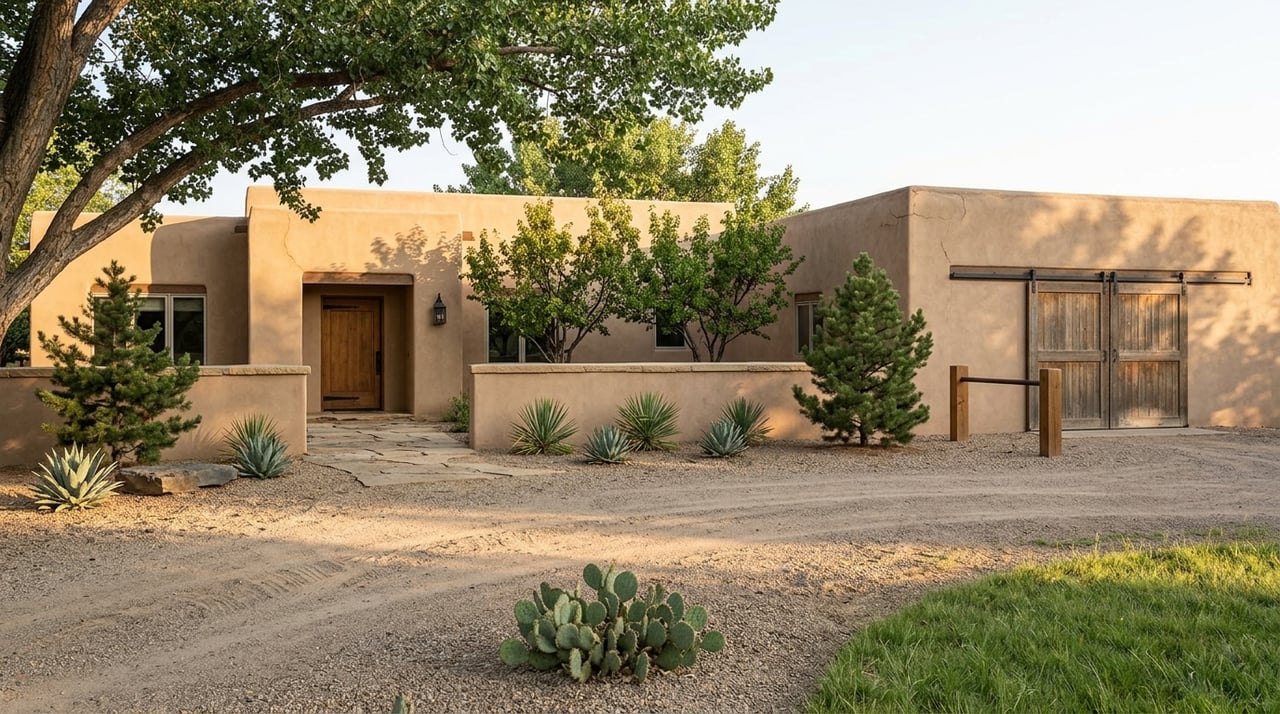
Looking for room to garden, keep animals, or enjoy a more land-based lifestyle without feeling far from city services? Corrales and Los Ranchos stand out because both communities still reflect their agricultural roots in visible, everyday ways. If you are considering farm- or horse-friendly living in the Albuquerque area, this guide will help you understand how these villages differ, what daily life can look like, and what to verify before you buy. Let’s dive in.
Why Corrales and Los Ranchos Appeal
Corrales and Los Ranchos are historic Rio Grande valley communities with long-standing agricultural identities. In both places, the land pattern, open space, and local policies still support a lifestyle shaped by irrigation, cultivation, and animal care.
Corrales describes itself as rural even as suburban growth surrounds it. Its history and planning documents connect that identity to gardening, orchards, pastures, livestock, animal husbandry, equestrian access, trails, and open space. Los Ranchos also traces its development to agricultural land patterns and has taken steps to preserve that heritage through open space and public programs.
For you as a buyer, that means these are not just neighborhoods with larger lots. They are communities where working land, seasonal rhythms, and stewardship still matter.
Corrales: Stronger Equestrian Focus
If horses are high on your wish list, Corrales is the more clearly horse-oriented option based on local policy and amenities. The village permits horses and mules on established trails, roadways, and designated areas, and its municipal code includes a horse arena as part of public recreation facilities.
Corrales also has an Equestrian Advisory Commission focused on preserving equestrian trails and lifestyle, supporting trail funding, promoting safety education, and helping develop designated routes. The Corrales Bosque Preserve adds to that appeal by allowing horseback riders on its trails alongside walkers, hikers, and bicyclists.
This does not mean every property will automatically suit your needs. Parcel-specific access, layout, and any restrictions still need to be reviewed carefully. Still, if you want a village where equestrian use is part of the public framework, Corrales offers the clearest signal.
Los Ranchos: Agriculture in Daily Life
Los Ranchos leans more toward small-scale agriculture and community-based land use. Its Larry P. Abraham Agri-Nature Center spans more than 40 acres and offers workshops, farm camps, a community garden with 30 plots, a Healers Garden, and a fiber-growing program with churro sheep.
The village also supports animal husbandry through practical educational programming such as butchering, shearing, and beekeeping workshops. It promotes agritourism through bike tours, matanzas, and agricultural festivals, which helps keep farming visible as part of the community’s identity rather than just its history.
For buyers who picture gardens, orchards, or lower-intensity agricultural use, Los Ranchos may feel especially appealing. The village has also said it helps connect landowners with farmers, which reflects an ongoing relationship between residents and the land.
How the Land Shapes the Lifestyle
In both Corrales and Los Ranchos, historical lot patterns matter. Each village describes long, narrow agricultural lots shaped by access to irrigation and roadways, and that pattern still influences how some properties function today.
In practical terms, many suitable properties may be better aligned with gardens, orchards, corrals, barns, and modest farming use than with a conventional suburban yard plan. That can be a major advantage if you want productive outdoor space, but it also means you should look closely at access, drainage, fencing, and how the land is actually used.
This is one reason rural and acreage purchases benefit from careful review beyond the home itself. The shape, services, and water setup of a property can matter just as much as the square footage.
Water and Irrigation Matter More Than You Think
Water due diligence is one of the biggest differences between this kind of property and a typical suburban home. In Corrales, there is no municipal water system, so homes and businesses rely on wells. The village also says there is no sewer system except for a small STEP-served area.
Many Corrales properties still have ditch access for irrigation, but the village directs residents to the New Mexico Office of the State Engineer for questions about wells and water rights. The village specifically encourages residents to understand well depth, water level, and water rights, which shows how central water is to ownership there.
Los Ranchos has a different utility setup. Domestic water is provided by the Albuquerque Bernalillo County Water Utility Authority, while irrigation information and ditch-rider support are tied to the Middle Rio Grande Conservancy District.
That difference can shape your ownership experience in a very real way. If you are comparing properties in both villages, the water source, irrigation access, and wastewater setup should be part of your side-by-side review from the start.
What Day-to-Day Ownership Can Feel Like
Living in these communities often means paying attention to seasonal patterns. Corrales notes that when the Rio Grande is at a low stage, the siphon feeding local acequias can stop drawing water. The village also highlights seasonal routines like tomatoes ripening, wine grape harvest, and green chile roasting.
That is more than local color. It means water windows, planting cycles, and harvest timing can be part of everyday life, especially if you plan to actively use the land.
Corrales’ planning materials also note that newcomers may need time to adjust to ordinary farm sounds and routines. If you are moving from a more conventional subdivision, it helps to understand that these are active agricultural communities, not purely decorative rural settings.
Open Space, Trails, and Local Amenities
Both villages offer access to open space and outdoor recreation, which adds to their appeal for buyers who want a semi-rural setting. In Corrales, the Bosque Preserve provides a narrow riparian corridor along the Rio Grande with trails open to walkers, hikers, horseback riders, and bicyclists.
In Los Ranchos, Hartnett Park includes a jogging and pedestrian trail, and the Agri-Nature Center offers walking and biking access during daylight hours. The village has also preserved farmland and open space through places like Del Norte Open Space, where past use included alfalfa, cattle grazing and breeding, trail maintenance, and roadway upkeep.
These features reinforce an important point: open space here is often tied to working land and agricultural heritage, not just scenery.
Markets and Community Rhythm
Local markets are part of the routine in both villages. Corrales’ official calendar lists a Growers’ Market on Wednesdays from 9:00 a.m. to 12:00 p.m. in July 2026.
Los Ranchos hosts a Growers’ Market on Saturdays from May 2 through November 14, with a second-Saturday winter schedule. Its Art Market follows a similar seasonal pattern and is presented as a North Valley market in a rural setting along Rio Grande Boulevard.
For many buyers, these regular markets help define the lifestyle. They reflect a community rhythm tied to local growing seasons, handmade goods, and public gathering spaces.
Corrales vs. Los Ranchos at a Glance
If you are weighing both locations, this quick comparison can help frame your search.
| Feature | Corrales | Los Ranchos |
|---|---|---|
| Overall character | Rural village with strong agrarian and equestrian identity | North Valley village with preserved agricultural character |
| Horse-friendly signals | Established trail access for horses and mules, municipal horse arena, Equestrian Advisory Commission | More agriculture-focused overall; verify parcel-specific horse suitability |
| Water setup | No municipal water, many homes rely on wells | Domestic water provided by Albuquerque Bernalillo County Water Utility Authority |
| Irrigation context | Ditch access may exist; water rights and well details are key | Irrigation support tied to Middle Rio Grande Conservancy District |
| Community agriculture | Seasonal farming rhythms and preserved farmland | Agri-Nature Center, workshops, garden plots, festivals, farmer connections |
What to Verify Before You Make an Offer
Before you move forward on a farm- or horse-oriented property, focus on the basics that shape long-term usability. These items can affect both your daily routine and your future costs.
- Water source
- Irrigation access
- Well condition, if applicable
- Septic layout and drainage
- Any conservation easement tied to the parcel
- Any agricultural restrictions tied to the parcel
- Property layout for barns, corrals, orchards, or garden use
- Trail or roadway access if horses are part of your plan
This kind of due diligence is especially important in Corrales, where wells, septic systems, and water rights can all play a central role in ownership. In either village, you want the land to match your goals, not just your first impression.
Why This Lifestyle Appeals to So Many Buyers
For some buyers, the draw is horses and trail access. For others, it is room for fruit trees, garden beds, or a quieter pace tied to open space and seasonal change. Corrales and Los Ranchos offer different versions of that experience, but both stand apart from standard suburban living.
Just as important, they still sit within the Albuquerque area rather than feeling fully remote. Corrales’ comprehensive plan describes residents as living within the state’s largest metropolitan area, which is a useful reminder that this lifestyle can offer both rural character and practical access to broader services and amenities.
If you are hoping to find a property that supports a more grounded, land-connected way of living, these two villages are worth a serious look. When you understand the tradeoffs, ask the right due diligence questions, and match the property to your goals, you can buy with much more confidence.
If you are exploring rural or acreage properties in Northern New Mexico and want clear, concierge-level guidance, connect with Origins Realty Group.
FAQs
What makes Corrales a horse-friendly community?
- Corrales allows horses and mules on established trails, roadways, and designated areas, includes a municipal horse arena in its parks framework, and has an Equestrian Advisory Commission focused on preserving equestrian trails and lifestyle.
What makes Los Ranchos attractive for farm-oriented living?
- Los Ranchos supports small-scale agriculture through the Agri-Nature Center, community garden plots, workshops on animal husbandry and land-based skills, and policies that preserve agricultural open space.
What should buyers verify before purchasing rural property in Corrales or Los Ranchos?
- Buyers should review water source, irrigation access, well condition if applicable, septic and drainage, and any conservation easement or agricultural restriction tied to the parcel.
How is water service different in Corrales and Los Ranchos?
- Corrales does not have a municipal water system and many properties rely on wells, while Los Ranchos receives domestic water from the Albuquerque Bernalillo County Water Utility Authority and irrigation support through the Middle Rio Grande Conservancy District.
What should out-of-area buyers expect from daily life in Corrales?
- Out-of-area buyers should expect a more active agricultural setting, including seasonal water patterns, harvest cycles, and ordinary farm sounds and routines that may differ from suburban neighborhoods.