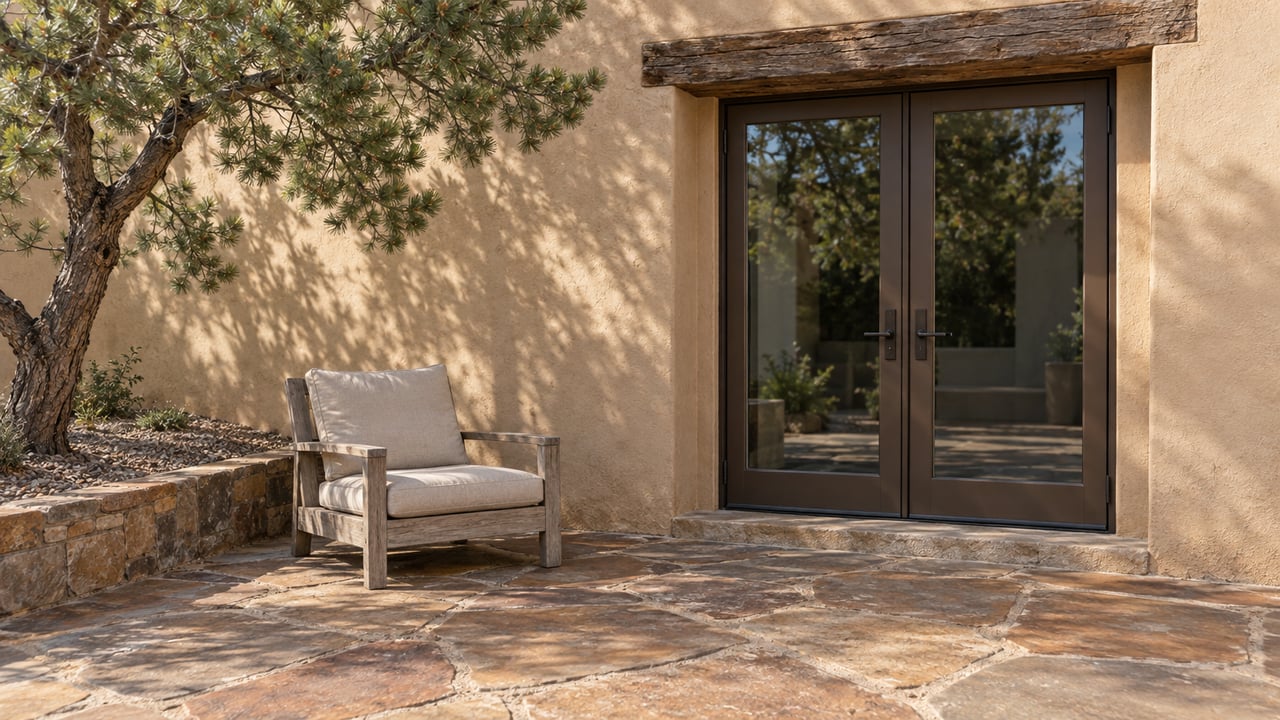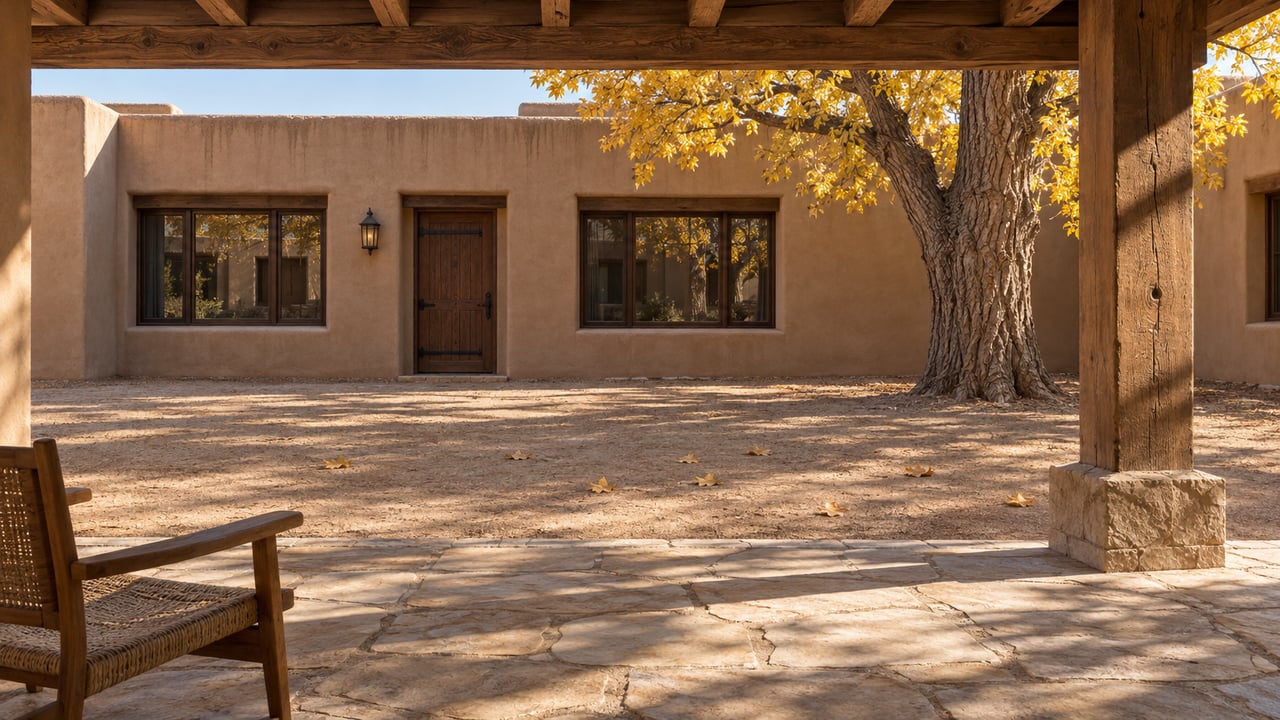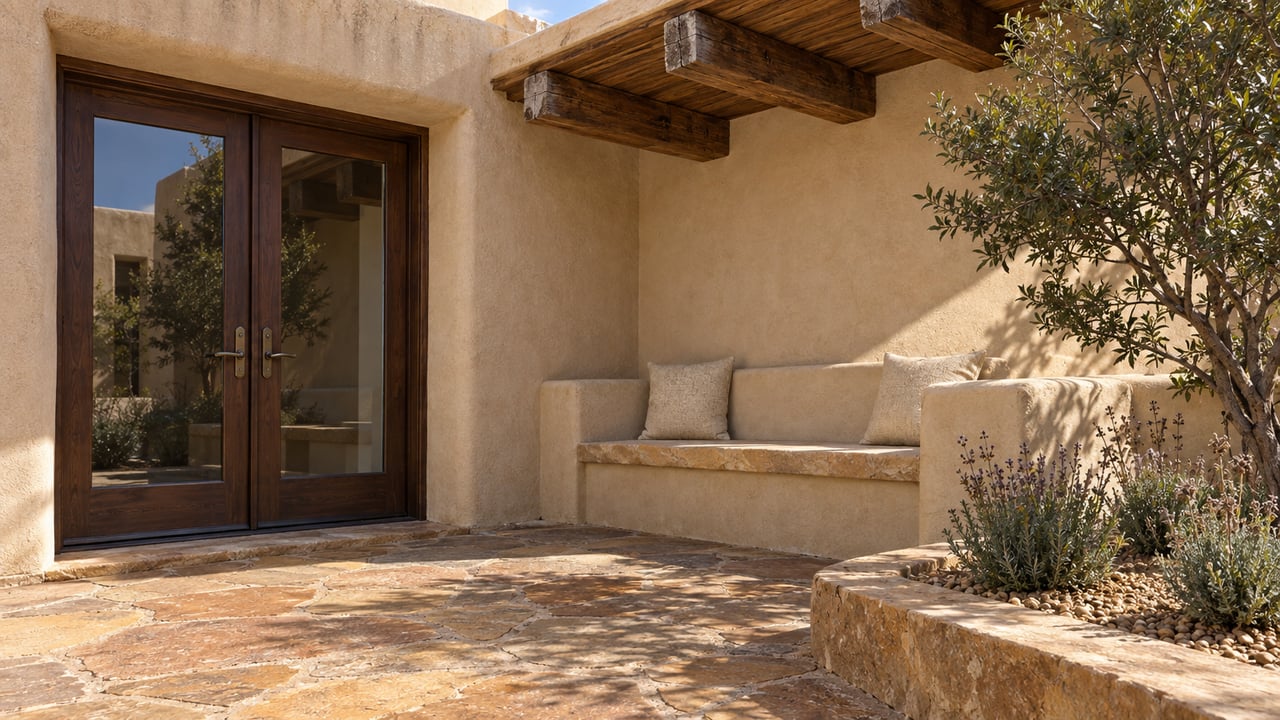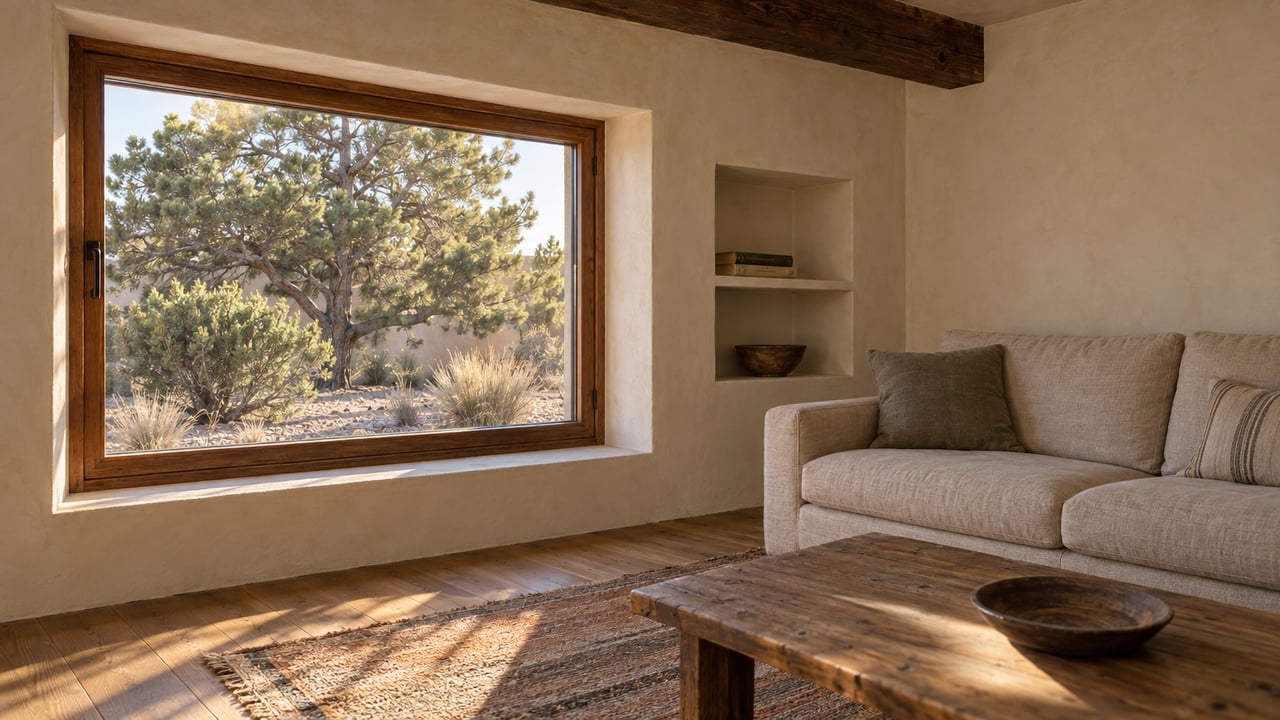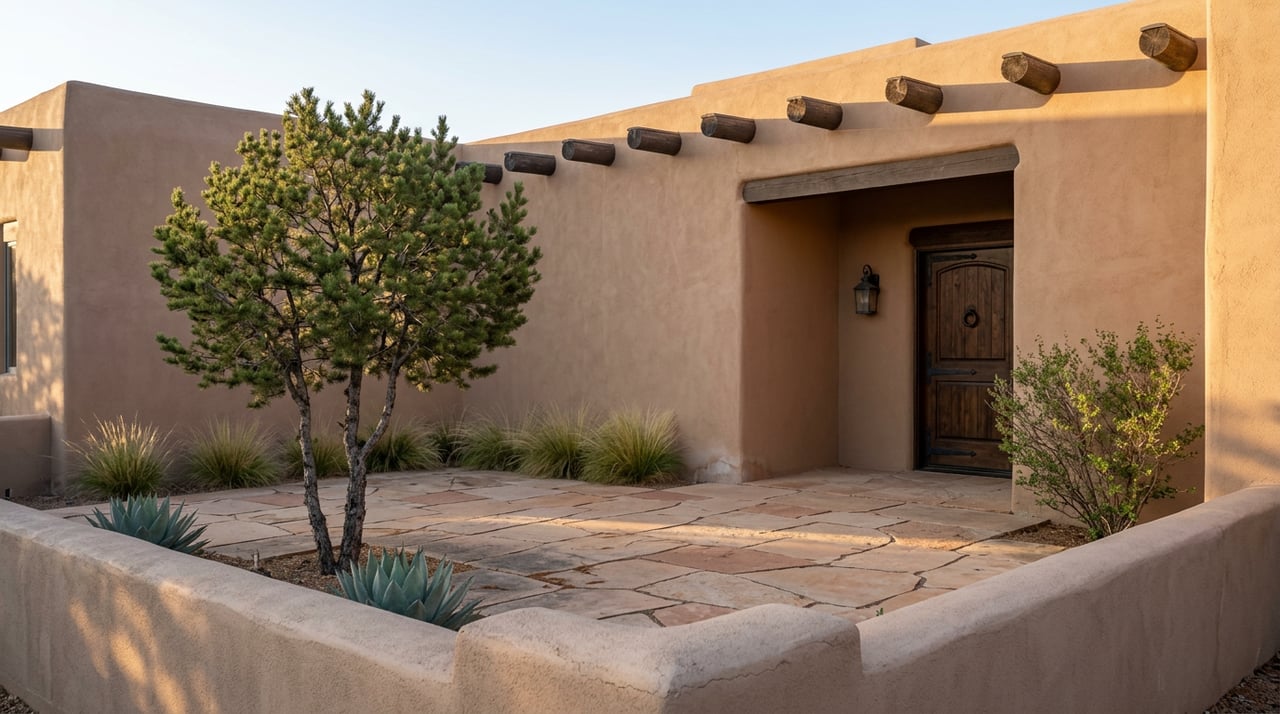
A buyer touring a house on the west side of town falls for the casita out back, the one already listed on a vacation rental platform with a rate calendar and five years of reviews. The listing agent mentions, almost in passing, that the property "comes with" its short-term rental permit. It doesn't. According to Bnbcalc, a residential STR permit is issued to a person, not a property, and it does not transfer at closing. The City of Santa Fe caps the total number of residential permits citywide at 1,000, issued first-come, first-served.
That single detail is a useful place to start, because it says something true about the whole Santa Fe market that a headline number never will: the thing you're actually buying is not always the thing being advertised, and the number quoted as "the market" is usually an average standing in for two or three markets that behave nothing alike.
What the median is actually averaging
As of August 16, 2026, aggregate MLS data covering the city of Santa Fe put the median list price at $695,000 across roughly 1,400 active listings, with residential homes specifically listing at a median of $891,250, or $416 per square foot. Homes that closed over the trailing 12 months sold at a median of $719,000, or $372 per square foot, and sellers received a median 98.1% of their final list price. Inventory sat at about 4.4 months of supply, the textbook definition of a balanced market, and the median home went under contract in 30 days.
Every one of those numbers is true. None of them describes a single, coherent market. They describe an average of a competitive lower tier and a much slower upper tier, and the gap between the two is the actual story.
The two speeds hiding inside one median
Earlier this year, local market analysis covering the first quarter of 2026 found that single-family home sales in Santa Fe had fallen 11.4% compared to the same quarter in 2025, with average time on market stretching from 56 days to 87 days. That slowdown was concentrated at the top of the market. In the roughly $800,000-and-above segment, inventory built and homes sat, handing well-capitalized buyers real negotiating leverage they didn't have during 2021 through 2023. In the more accessible range, particularly well-maintained single-family homes priced under $600,000, demand stayed competitive and correctly priced homes still moved quickly.
That distinction matters more than the citywide figure when you're deciding what to expect from a specific search.
Put a few neighborhoods on that spectrum and the split gets concrete. Condos in Agua Fria have been trading around $435,000, well under the citywide median. Homes in South Capitol, the grid-patterned neighborhood of tree-lined streets and front porches just south of the State Capitol building, have ranged from roughly $400,000 to $1.5 million depending on lot and location. Move west to Las Campanas, the gated community built around two Jack Nicklaus golf courses and a 92-stall equestrian center, and homes currently run from about $875,000 to $5.5 million, with raw land parcels from $265,000 to $2.4 million. The Historic Eastside, walkable to Canyon Road's galleries, spans an even wider range, from roughly $900,000 for a modest casita to eight figures for a compound.
A single citywide median cannot describe a market that runs from a $435,000 condo to a $10 million adobe compound. It can only describe the midpoint, which is why "the market" quoted in a national headline and the market a specific buyer experiences are frequently two different things.
| Segment | Typical 2026 behavior |
|---|---|
| Under $600,000, well-maintained single-family | Competitive; correctly priced homes still attract offers relatively quickly |
| $800,000 and above (Las Campanas, Historic Eastside, Monte Sereno) | Inventory has built, days on market has stretched, buyers have real negotiating room |
The excise tax to consider in a home sale
There's a second mechanism worth understanding when considering the costs of a sale. Santa Fe applies an excise tax to single-family home sales.
It's worth keeping in mind, but it's the kind of detail that only shows up once an offer is actually being drafted, not while a buyer is still scrolling listings.
Why the STR permit cap matters more than it looks
Come back to the casita. Santa Fe's residential STR permit cap of 1,000 citywide is enforced on a first-come, first-served basis. Permits also come with a 50-foot proximity rule, meaning a residential STR can't sit within 50 feet of another permitted STR, and they expire every December 31 regardless of issue date, with a renewal window that runs January 1 through April 15 each year.
None of that transfers with a deed. If a buyer's decision to make an offer rests partly on income the current owner has been generating from short-term rentals, the buyer is not purchasing that income. For the second-home buyer weighing whether a Santa Fe property could offset its own carrying costs, this is the single fact most likely to be assumed rather than confirmed, and it's worth confirming before it factors into an offer.
What this means depending on where you're standing
None of this is an argument for or against buying in Santa Fe. It's a case for being specific about which Santa Fe market applies to a given search.
A buyer working under $600,000 should expect the competitive conditions the median implies: homes that are priced right still move in something close to that 30-day median, and hesitation can cost the property. A buyer looking at $800,000 and above, in Las Campanas or the Historic Eastside or similar, should expect the opposite: more room to negotiate, more time to think, and sellers who are increasingly willing to talk about closing costs or rate buydowns rather than hold firm on price. A buyer counting on short-term rental income as part of the equation should treat the permit as a separate, uncertain step in the transaction rather than an asset that comes with the house.
The median price is a useful headline. It is not a strategy. The strategy comes from knowing which of Santa Fe's markets you're actually standing in.
Frequently asked questions
Does a short-term rental permit transfer to a new owner when a property sells? No. Santa Fe issues residential STR permits to a person, not a property, and they are not transferable with a sale.
Is Santa Fe currently a buyer's market or a seller's market? It depends heavily on price tier. Homes under roughly $600,000 have continued to draw competitive offers when priced correctly, while the $800,000-and-above segment has seen inventory build and days on market stretch, giving buyers more leverage than they had a few years ago.
Does Santa Fe apply an excise tax to single-family home sales? Santa Fe applies an excise tax to single-family home sales.
Whether the search is for a starter home under Santa Fe's median, a golf course property in Las Campanas, or an adobe compound on the Historic Eastside, the numbers behave differently depending on where you're looking. Origins Realty Group works across every one of these price tiers and can walk through what the current conditions actually mean for a specific property or neighborhood. Connect with a Santa Fe real estate expert to talk through where your search fits into the market as it stands today.
This article is general information, not legal, tax or financial advice. Consult a qualified professional about your situation.