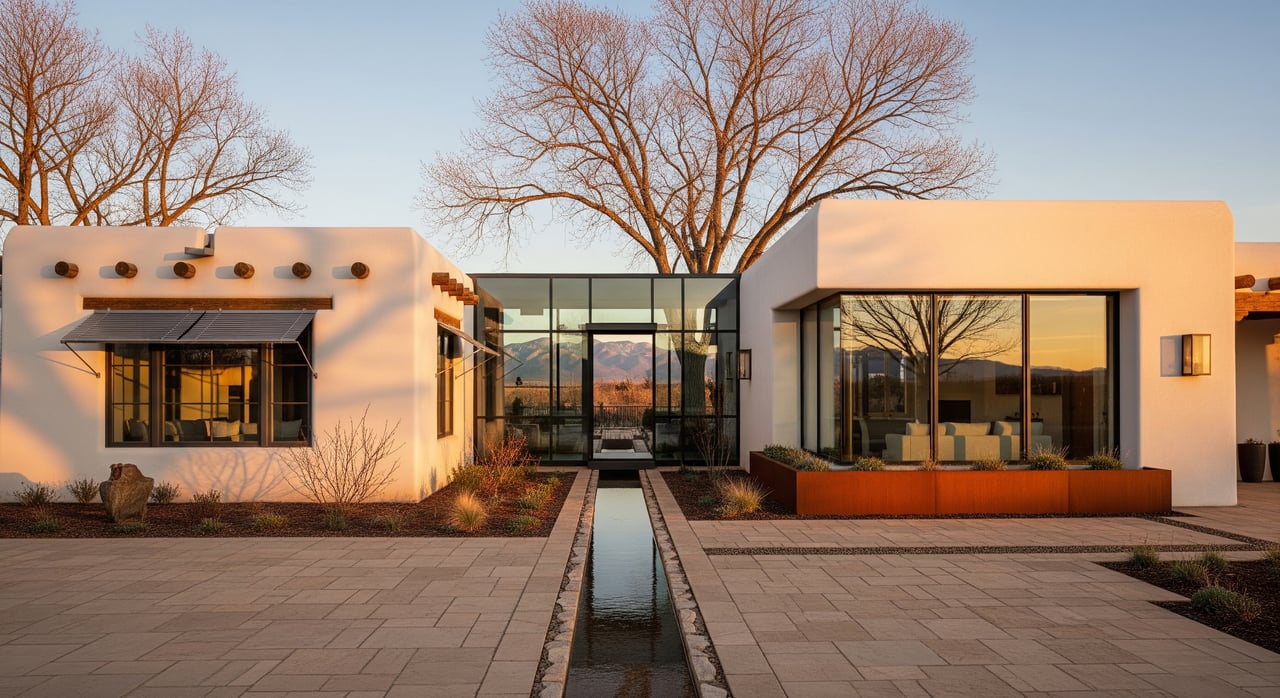
Should you build a brand-new home or transform the one you have in Corrales or Los Ranchos? It is a big decision, and the rural character, acequia networks, and well-and-septic realities in these villages make it more complex than in a typical subdivision. You want a clear path that balances budget, timeline, approvals, and future resale. This guide gives you a practical framework, tailored to Corrales and Los Ranchos, so you can move forward with confidence. Let’s dive in.
How Corrales and Los Ranchos shape your decision
Corrales and Los Ranchos are rural-residential communities with larger lots, agricultural roots, and strong preferences for preserving open space. That setting affects what you can build, how fast you can do it, and how buyers respond later. Many homes rely on private wells and septic systems, and floodplain proximity or acequia crossings can shape your site plan.
The two villages are separate municipalities, each with its own planning processes and timelines. Septic approvals are handled by county environmental health departments, and well permits fall under the New Mexico Office of the State Engineer. Historic or conservation overlays and neighborhood covenants can further influence exterior materials, heights, and fencing. In this corridor, site-specific feasibility often decides whether a remodel or a new build is the smarter move.
Cost ranges: new build vs. major remodel
New build costs in this market
- Custom single-family home: About $200 to $400+ per square foot, depending on complexity, finish level, and site work.
- More economical builds: Roughly $150 to $250+ per square foot for simpler designs or production-style approaches.
- Local cost drivers: Rural site work, septic and well installation, flood mitigation near arroyos or the Rio Grande, acequia crossings, and specialty trades can push budgets above national averages.
Major remodel or addition costs
- Whole-house remodels or large additions: About $100 to $300+ per square foot based on scope, structural changes, systems upgrades, and finishes.
- Room-level projects: Kitchens and baths vary widely. Midrange kitchens often land in the tens of thousands to low six figures. High-end designs can exceed that.
What pushes budgets up locally
- Site work like grading, long driveways, and utility trenching.
- New or upgraded septic systems and well work.
- Floodplain mitigation, foundation engineering, or pier systems.
- Acequia-related approvals and crossings that affect driveways or utilities.
- Design standards or CC&Rs that require higher-cost materials and finishes.
Timelines you can expect
New custom build timeline
- Feasibility and due diligence: 1 to 3 months for soil tests, septic and well checks, and floodplain or acequia review.
- Design and construction documents: 2 to 6 months with an architect or engineer, depending on complexity.
- Permitting and review: 1 to 4+ months, longer if variances or public hearings are needed.
- Construction: 9 to 18+ months, driven by site conditions and subcontractor scheduling.
- Total window: About 13 to 31+ months from first study to move-in for a custom home.
Major remodel timeline
- Feasibility and design: 1 to 3 months.
- Permitting and plan review: 1 to 3 months, with added time if variances or floodplain review are required.
- Construction: 2 to 9 months depending on scope and whether you are doing interior-only work or structural additions.
- Total window: About 3 to 15+ months from start to finish.
Permits and approvals to plan for
Common approvals
- Building permit from the village or county.
- Grading or site work permits if you plan substantial earthwork.
- Septic permits and soils or percolation tests through county environmental health.
- Well permits and related documentation with the New Mexico Office of the State Engineer.
- Electrical, plumbing, and mechanical permits and inspections.
- Floodplain development permits and elevation certificates if you are within a FEMA flood zone.
- Acequia association approvals for ditch crossings or work near irrigation ditches.
- Variances or conditional use permits if you exceed zoning or setback standards.
- Historic or design review where overlays apply.
Review timing tips
Simple remodel permits can process in weeks, while larger plan sets often require several review rounds that add months. If you need variances or special exceptions, public hearing schedules can add more time. Early pre-application meetings with village planners usually shorten review time and reduce redesigns.
Contractor licensing in New Mexico
Work with licensed and insured contractors who understand Corrales and Los Ranchos sites, including septic, wells, and floodplain conditions. Licensing and specialty trade oversight run through New Mexico’s Construction Industries division. Always verify licenses, insurance, and recent local references.
Site factors that can change the plan
Wells and septic systems
Many properties rely on private wells and septic systems. New wells or replacements add time and cost, and you must verify aquifer capacity and permitting. Septic feasibility depends on soils, drainage, and lot size. Adding bedrooms often triggers a larger or engineered system with space for a replacement area.
Acequias and irrigation ditches
Active acequia associations regulate ditch crossings and bank work. These rules can affect driveway alignments, trenching for utilities, and even foundation placement. Plan for notifications, permits, or bonds where work is near a ditch.
Floodplains and arroyos
Proximity to the Rio Grande and arroyo channels may require floodplain development permits and engineered foundation or floodproofing solutions. Check FEMA maps early and coordinate with the local floodplain administrator. Elevation standards and mitigation can significantly impact cost and schedule.
Soils and foundations
Alluvial soils and expansive clays are common along the corridor. A geotechnical investigation helps you anticipate foundation type, depth, and any pier systems required. This is a key early cost variable for both remodels with structural changes and new builds.
Rural design and utilities
Both communities value rural character. Exterior materials, massing, fencing, and preservation of vegetation often influence approvals and resale. Long service drops for electricity, propane instead of natural gas, and driveway improvements can add meaningful cost in rural locations.
Resale and value: what the market rewards
Improvements that add value
- Respect the scale and character of the neighborhood, including single-story massing and earth-tone materials when appropriate.
- Upgrade kitchens, baths, and mechanical systems for function and efficiency.
- Improve circulation and add conditioned square footage that fits the lot and surroundings.
- Invest in outdoor spaces that leverage views and conserve water, along with barns or covered parking suitable for rural use.
- Maintain reliable septic and well systems, with documented water access where applicable.
Risks and lower ROI
- Over-improving relative to nearby homes can limit percentage returns.
- Designs that feel urban or out of place can reduce appeal.
- Additions that create awkward flow or reduce usable outdoor area can be discounted by buyers.
- Unpermitted work damages marketability and can lead to costly corrections.
New build vs. remodel through a resale lens
A high-quality new build that aligns with neighborhood expectations can command a premium, but local comparable sales still set the ceiling. Midrange remodels often recover a solid portion of cost, especially in kitchens and baths, while very large additions or luxury upgrades have more variable returns. Think like a future seller as you shape scope and finishes.
A simple decision framework
Ask these questions early to clarify your path:
- Is the site cooperative? If septic, well, floodplain, or acequia constraints are heavy and expensive to solve, a remodel inside the current footprint may be more practical and faster.
- Is the existing structure worth keeping? If the home has major structural issues or the layout cannot meet your needs without extreme reconfiguration, a ground-up rebuild can be better long term.
- Do neighborhood comps support your target finish level and size? Avoid overbuilding beyond the price ceiling for similar lots and locations in Corrales or Los Ranchos.
- Do you have time? If you need to move within the year, a major remodel may align better with your timeline than a custom new build.
Feasibility checklist
Use this checklist before committing to a direction:
- Title and CC&Rs for deed restrictions, agricultural easements, or design standards.
- Zoning, setbacks, lot coverage, height, and accessory structure rules with the village planning office.
- FEMA flood maps and any local floodplain overlays.
- Acequia locations, crossing rules, and permit steps.
- Septic feasibility: soils and percolation tests with county environmental health.
- Well feasibility and water rights with the state engineer’s office.
- Utility distances, gas availability, and telecom.
- Geotechnical report for foundation planning.
- Access, driveway permits, and road maintenance.
- Historic or design overlays that require review.
- Contingency reserves of 10 to 20 percent or more for unknowns.
Who to talk to early
- Village of Corrales Planning and Zoning staff.
- Village of Los Ranchos planning staff for properties in that village.
- Sandoval County or Bernalillo County Environmental Health for septic.
- New Mexico Office of the State Engineer for wells and water rights.
- Local floodplain administrator for site-specific guidance.
- A licensed architect or designer with rural experience.
- A licensed general contractor experienced in Corrales and Los Ranchos.
- The relevant acequia association.
- A licensed geotechnical engineer if soils are a concern.
- A title company or real estate attorney for deed and covenant review.
Next steps
If you take one step now, make it an early feasibility consult. A short round of checks on zoning, septic, well, floodplain, and acequia rules can save months and thousands of dollars. From there, you can compare a remodel scope to a new build with realistic budgets and timelines.
When you are ready, reach out for local market context, recent comparable sales, and introductions to architects and builders who know the villages. Our team can coordinate the moving parts and help you choose the path that creates the most value for your goals. Connect with the concierge-level guidance you deserve through Origins Realty Group.
FAQs
What makes Corrales and Los Ranchos different for building or remodeling?
- Their rural character, well-and-septic reliance, acequia networks, and potential floodplain conditions create unique site and permitting considerations compared to urban neighborhoods.
How much does a custom new build typically cost locally?
- Custom homes often range from about $200 to $400+ per square foot, with simpler builds starting near $150 to $250+ per square foot depending on site work and finishes.
What does a major remodel usually cost in this area?
- Whole-house remodels or large additions commonly range from about $100 to $300+ per square foot, with kitchens and baths varying from tens of thousands to six figures.
How long does permitting take for these projects?
- Smaller remodel permits can process in weeks, while large new builds or complex remodels often face multiple review rounds that add months, especially if variances are needed.
What site issues most often change scope or budget?
- Septic feasibility, well capacity, floodplain or arroyo proximity, acequia crossings, and soils or foundation requirements are the most common drivers.
How do I avoid over-improving for resale?
- Align square footage, materials, and design with neighborhood standards and comparable sales, and focus on functional upgrades that buyers value.
Who should I contact first to get started?
- Begin with the village planning office, county environmental health for septic, the state engineer for well questions, and a licensed architect and contractor experienced in Corrales and Los Ranchos.