Wondering whether you should live close to the Plaza or head out where the lots are larger and the landscape opens up? In Santa Fe, that choice is less about right or wrong and more about how you want your days to feel. If you are deciding between in-town Santa Fe and the outskirts, this guide will help you compare lifestyle, access, housing patterns, and everyday practicalities so you can choose with confidence. Let’s dive in.
Why location matters in Santa Fe
Santa Fe County’s planning framework is built around offering different living environments and lifestyles while preserving the area’s rural landscapes. That makes the in-town versus outskirts decision especially important here, because each area offers a distinct rhythm of daily life.
Even the commute data reflects that difference. The mean travel time to work is 21.0 minutes in the city of Santa Fe and 23.8 minutes countywide, which shows that the region is relatively compact overall, though drives can lengthen as you move farther out. In other words, you may not be choosing between near and far as much as choosing between convenience and setting.
Santa Fe also offers a broad cultural footprint. The region has more than 250 art galleries, museums, and performing arts venues, with many located outside the city in smaller communities and pueblos. So while downtown is the most concentrated cultural hub, the outskirts are not disconnected from the area’s larger creative identity.
In-town Santa Fe lifestyle
If you want the strongest day-to-day access to restaurants, galleries, shops, and museums, in-town Santa Fe stands out. Downtown, the Plaza, and Canyon Road form the densest cultural core, with a high concentration of dining, shopping, and arts destinations.
Canyon Road is especially notable. Local tourism materials describe it as having more than 100 galleries along a half-mile pedestrian-friendly stretch, giving you a uniquely concentrated arts experience. If you enjoy being able to step into the cultural heart of Santa Fe with little planning, that can be a major advantage.
Midtown offers a different version of in-town living. It is being promoted as a walkable district where daily needs are close by, which may appeal if you want convenience without being centered entirely on the historic core.
What homes feel like in town
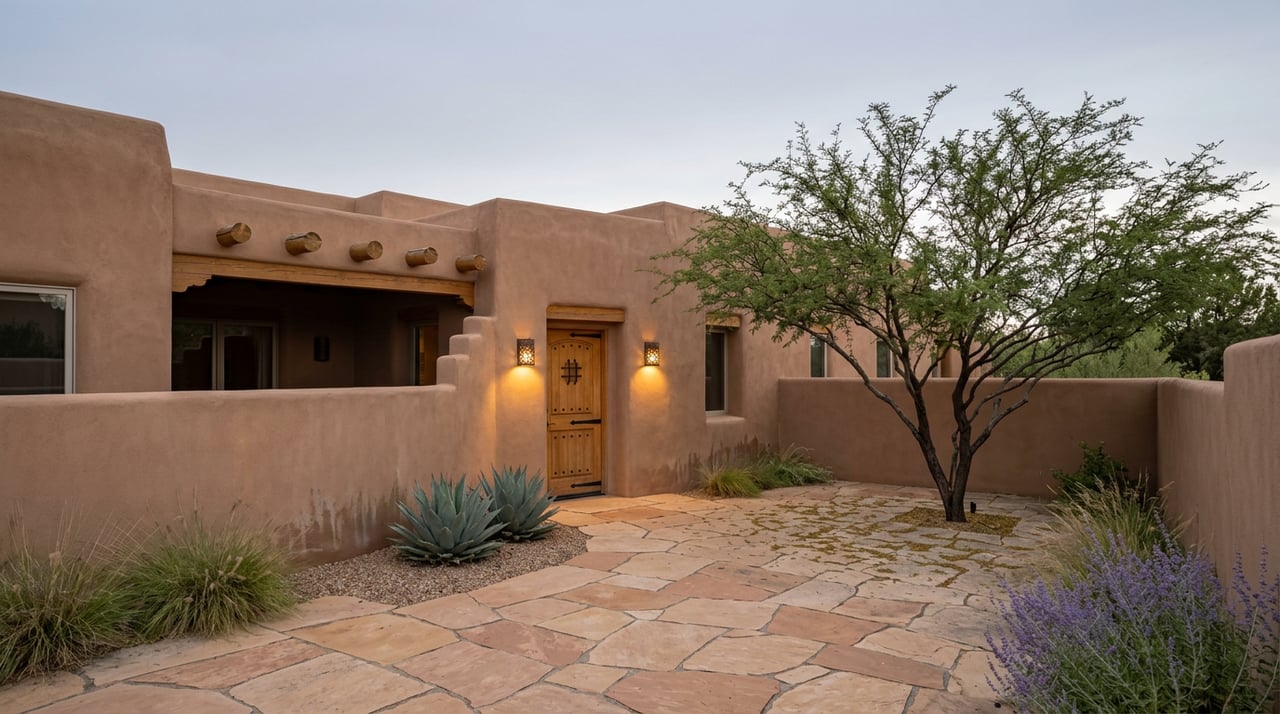
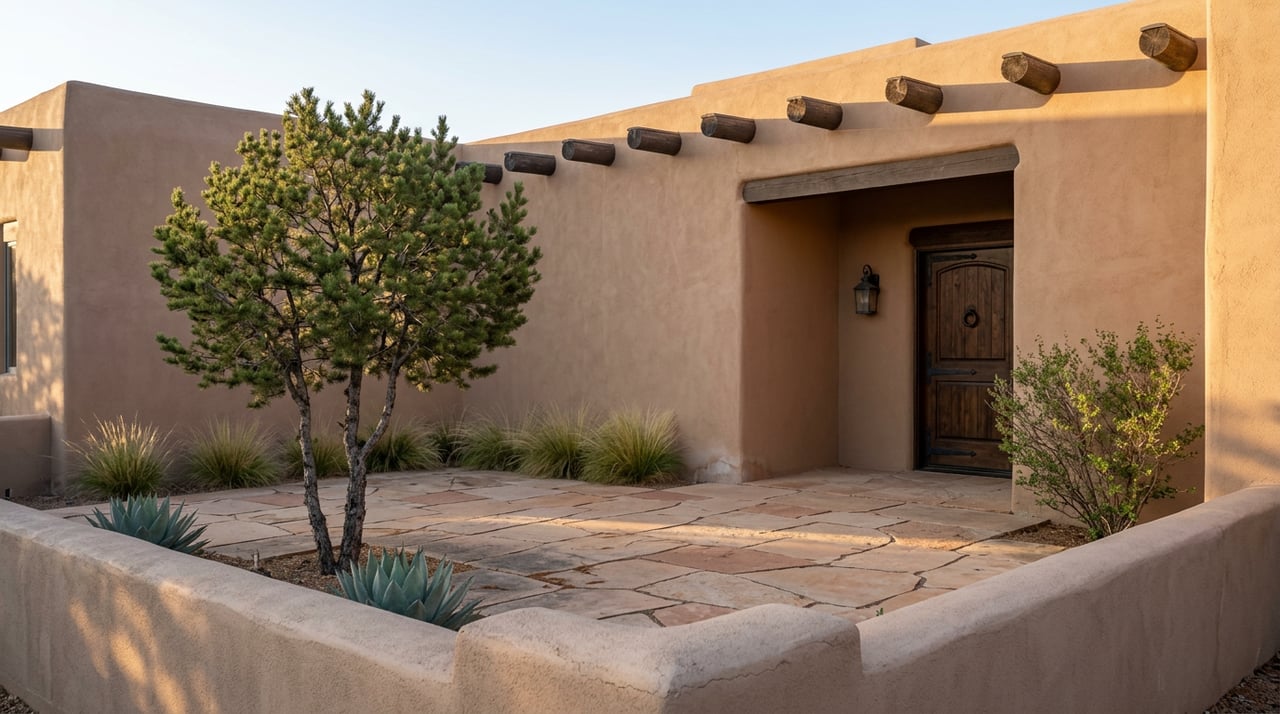
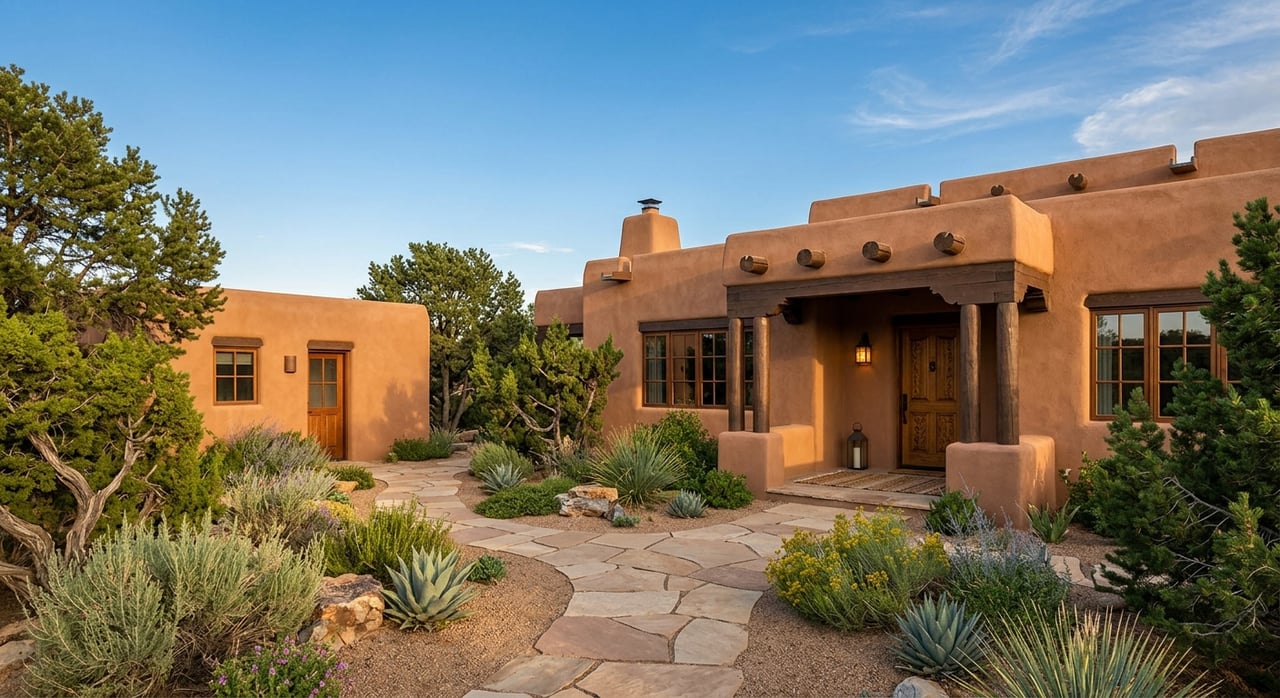
In-town housing is visually varied and closely tied to Santa Fe’s architectural identity. The city is known for low-slung adobe architecture, and tourism materials point to hundreds of historic adobe homes in Spanish Pueblo and Territorial styles.
That character often comes with added rules, especially in historic districts. The city’s preservation handbook distinguishes between older and newer Santa Fe style in those districts and requires compliance when owners alter properties there. If design consistency and historic character matter to you, that may be a plus. If you want more freedom to change a property, it is something to weigh carefully.
Who in-town Santa Fe suits best
In-town Santa Fe can be a strong fit if you want:
- Frequent access to the Plaza, downtown, or Canyon Road
- A walkable or closer-in lifestyle
- Historic architecture and distinctive design character
- Easier spontaneity around dining, shopping, and arts venues
Eldorado lifestyle
If you want more land but still want a direct connection to Santa Fe, Eldorado is one of the clearest middle-ground options. It combines a close-in county setting with community infrastructure that supports everyday living.
Santa Fe County notes that Eldorado has more than 4,000 homes. The area also includes green belts, wilderness areas, bike paths, equestrian trails, stables, a pool, a library, a senior center, a community center, fields, parks, and multiple ranches.
The scale of open space is a big part of Eldorado’s appeal. Community materials state that the greenbelts total 987 acres and the community preserve contains 4,094 acres. If your ideal day includes room to spread out while still having organized amenities nearby, Eldorado often checks that box.
What homes feel like in Eldorado
Eldorado has distinctive residential rules that shape the look and feel of the community. Its covenants set a minimum residential lot size of one acre, and the architectural guidelines define Santa Fe style using features like adobe or stucco walls, earth colors, vigas, portals, and patios.
That means Eldorado often appeals to buyers who want space without giving up regional design character. It can feel more residential and self-contained than in-town Santa Fe, while still retaining a recognizable Santa Fe visual language.
Getting around from Eldorado
For many buyers, access is what makes Eldorado stand out among outlying areas. NCRTD’s fare-free Route 280 links Santa Fe and Eldorado Monday through Friday, which gives the community a stronger connection to the city than some other outer locations.
At the same time, Eldorado functions more like a county-based environment than a city neighborhood. Santa Fe County notes that some fire stations are not staffed full time, and county public works is responsible for roads and related infrastructure. That difference matters if you are comparing city services with a more county-oriented setup.
Who Eldorado suits best
Eldorado may be a strong fit if you want:
- One-acre lots
- Extensive trails, open space, and community amenities
- Santa Fe style design guidelines
- A more self-contained residential setting with access to Santa Fe
Nambe and Pojoaque Valley lifestyle
If your priority is a more rural, traditional-community setting, Nambe and the greater Pojoaque Valley deserve a close look. This area offers a different feel from both the city core and master-planned residential environments.
The official Nambé Pueblo site places the community about 15 miles north of Santa Fe at the base of the Sangre de Cristo Mountains. Santa Fe County’s Pojoaque Valley plan describes the greater valley as a traditional agricultural settlement that remains relatively rural compared with Santa Fe, Española, and Los Alamos.
That rural character is central to the experience. The county plan notes that the valley lacks many urban amenities while retaining open viewsheds and a unique rural setting. If you are drawn to land, water, and a quieter daily pace, this may align more closely with your goals.
What homes and land patterns feel like in Nambe
The land-use pattern here differs from both in-town Santa Fe and Eldorado. In the Pojoaque Valley Traditional Community District, the minimum lot size is three-quarters of an acre, with a possible reduction to one-third of an acre where community water and sewer are available.
That helps explain why the area reads less like a subdivision and more like a rural landscape shaped by land and infrastructure. If you are looking for a traditional-community feel rather than a denser urban setting or a more structured planned development, this distinction matters.
Services and infrastructure in Nambe
County infrastructure also reflects the area’s rural identity. Nambe has a county community center, and the Pojoaque volunteer fire district serves Nambe and nearby communities.
Santa Fe County is also advancing the Aamodt Rural Water project to support reliable drinking water and fire protection in the Pojoaque Basin. NCRTD lists a Pojoaque-Nambé MyBlue microtransit zone as well, offering some transit support, though not the same convenience you would expect from in-town Santa Fe.
Who Nambe suits best
Nambe and the Pojoaque Valley may fit if you want:
- A rural and traditional-community setting
- Open views and a quieter landscape
- A land-and-water oriented environment
- Some connection to Santa Fe without an in-town feel
Pecos and Glorieta lifestyle
If you picture mountain surroundings, outdoor access, and a setting where the drive is part of the experience, Pecos and Glorieta stand apart. These communities lean more strongly toward recreation and retreat-style living than the other areas in this comparison.
Pecos is described by local tourism materials as an ancient village with modern amenities, including small family-owned lodges, restaurants, shops, and guiding services. Pecos National Historical Park is located 25 miles east of Santa Fe, adding to the area’s destination feel.
Glorieta has a similarly outdoor-focused identity. It sits in the Sangre de Cristo mountain range about 15 miles southeast of Santa Fe, and public materials describe a 2,400-acre campus with more than 50 miles of trails.
What homes and services feel like in Pecos and Glorieta
The built environment in Pecos and Glorieta tends to feel more rustic and retreat-oriented. Public-facing materials for Pecos emphasize rustic seasonal cabins and year-round casitas, while Glorieta highlights trails, retreat facilities, and outdoor programming.
The service pattern is also more rural. The Glorieta Pass fire district serves Pecos and surrounding communities from Glorieta, and some stations are not staffed full time. If you are comparing convenience and municipal-style support, that is worth factoring into your search.
Who Pecos and Glorieta suit best
Pecos and Glorieta may be a strong fit if you want:
- A mountain or outdoor-focused setting
- Rustic or retreat-style surroundings
- More deliberate separation from the city core
- A lifestyle where access to trails and landscape shapes your routine
How to match lifestyle to location
When you compare in-town Santa Fe with the outskirts, the best answer usually comes down to what you want easiest access to each day. If you want spontaneous dining, galleries, and a close relationship to the Plaza, in-town living offers the strongest fit.
If you want acreage and community amenities without feeling too far removed, Eldorado often lands in the middle. If rural character and traditional land patterns matter most, Nambe and the Pojoaque Valley may feel more aligned. If mountain scenery and recreation lead your wish list, Pecos or Glorieta may be the better direction.
A few helpful questions can bring your priorities into focus:
- Do you want daily convenience or more room around you?
- How important is quick access to galleries, restaurants, and downtown destinations?
- Would you rather have a one-acre lot, a rural landscape, or a mountain setting?
- Are architectural rules and design consistency appealing to you or limiting?
- Do you want city-style convenience, county-based living, or something in between?
A simple side-by-side view
| Area | Best known for | Housing pattern | Access feel |
|---|---|---|---|
| In-town Santa Fe | Arts, dining, architecture, walkability | Varied homes, including historic adobe and regulated districts | Closest to Plaza, downtown, and Canyon Road |
| Eldorado | Acreage plus amenities | One-acre minimum lots with Santa Fe style guidelines | Connected to Santa Fe, including fare-free weekday Route 280 |
| Nambe / Pojoaque Valley | Rural and traditional-community character | Larger-lot rural pattern, with district-based minimums | Some transit support, but less urban convenience |
| Pecos / Glorieta | Mountains and outdoor recreation | Rustic, retreat-oriented environment | More deliberate drive and stronger separation from city life |
The right fit depends on how you want home to function in your daily life. Some buyers want to be near the cultural core, while others want space, views, or a quieter rhythm that starts the moment they pull into the driveway.
If you are weighing Santa Fe neighborhoods, rural properties, or a move from in-town to the outskirts, Origins Realty Group can help you compare options with clear local insight and concierge-level guidance.
FAQs
What is the main difference between in-town Santa Fe and the outskirts?
- In-town Santa Fe offers the most concentrated access to the Plaza, downtown, Canyon Road, restaurants, and galleries, while the outskirts offer more space, different land-use patterns, and more rural or mountain-oriented settings.
Is Eldorado considered a good middle-ground near Santa Fe?
- Eldorado is often the clearest middle-ground option because it combines one-acre lots, extensive community amenities, Santa Fe style design rules, and a fare-free weekday bus link to Santa Fe.
How does Nambe differ from Eldorado for homebuyers?
- Nambe and the Pojoaque Valley have a more rural and traditional-community feel, while Eldorado is more self-contained and amenity-rich with a more structured residential pattern.
What makes Pecos and Glorieta different from other Santa Fe area communities?
- Pecos and Glorieta stand out for their mountain setting, outdoor recreation identity, rustic built environment, and more intentional separation from Santa Fe’s city core.
Are commute times around Santa Fe generally long?
- Santa Fe is relatively compact overall, with a mean travel time to work of 21.0 minutes in the city and 23.8 minutes countywide, though drives can become longer in outer communities.
Does in-town Santa Fe have more property design rules?
- In historic districts, in-town Santa Fe properties may be subject to preservation rules that require compliance when owners alter homes, especially where historic architectural character is part of the district.