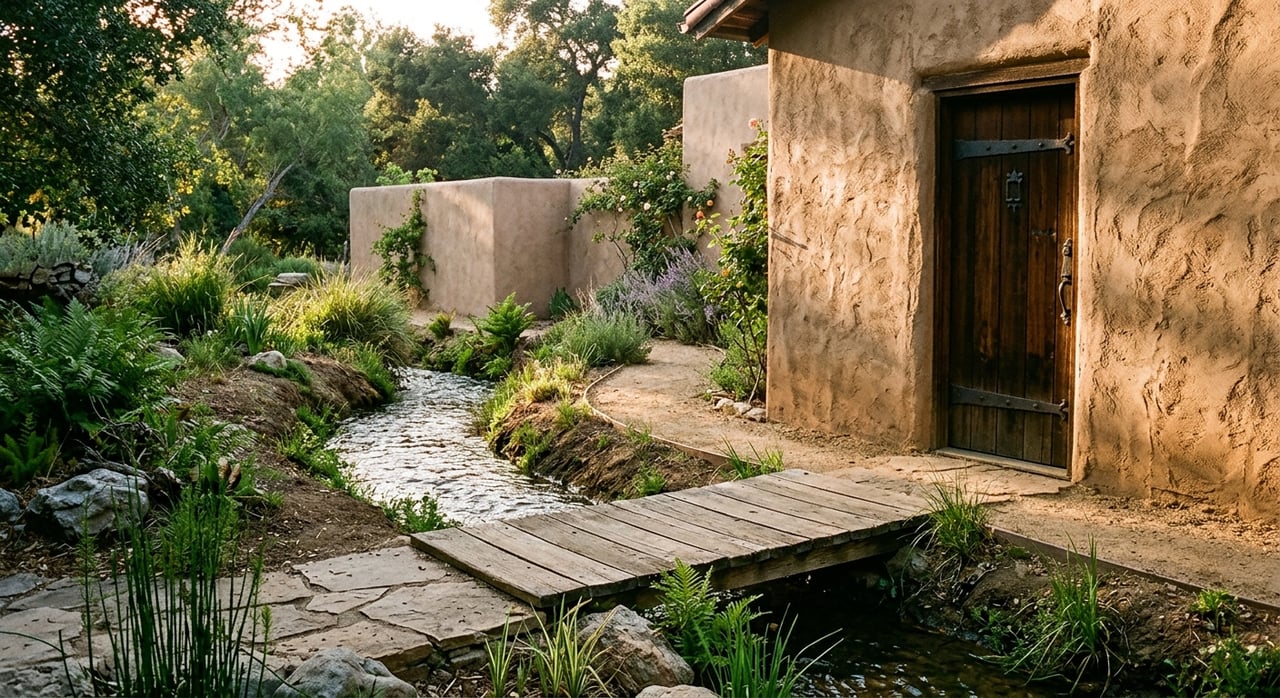
If you are searching for space, quiet, and a stronger connection to the land, Nambe and the Pojoaque Valley may feel like a rare fit. This is not a typical subdivision market, and that is exactly why many buyers are drawn here. You get a more rural setting with a long agricultural history, but you also need to look more closely at details like water, access, and improvements before you buy. Let’s dive in.
Why Nambe feels different
Nambe and the broader Pojoaque Valley function more like a rural land market than a conventional neighborhood market. Santa Fe County planning materials describe the valley as a traditional agricultural settlement that remains relatively rural compared with Santa Fe, Espanola, and Los Alamos.
That rural character shapes what you will see on the market. Instead of rows of similar homes, you may find a mix of houses, land parcels, agricultural uses, and small-scale commercial uses depending on the area and land-use category.
County land-use materials also show that some areas can include single-family homes, duplexes, manufactured homes, and family compounds. For you as a buyer, that means parcel layouts and property rights may be more varied than what you would expect in a standard suburban setting.
What buyers can expect here
Rural homes with more variation
In Nambe and the Pojoaque Valley, every property tends to have its own story. Lot size, water source, access, and permitted improvements can vary widely from one parcel to the next.
That can be a real advantage if you want flexibility, open space, or land with a traditional rural feel. It also means you should review each property carefully rather than assuming the same rules apply across the board.
A market shaped by land and history
Santa Fe County notes that the valley includes county-regulated traditional community lands, Pueblo lands, and land-grant areas. Because of that layered land pattern, boundary review, title review, and recorded access matter more here than they often do in newer developments.
If you are relocating from out of state or from a more suburban market, this is one of the biggest mindset shifts to make. In Nambe, the land itself is often just as important as the house sitting on it.
Water is the first due-diligence priority
Wells, acequias, and future regional water
In Nambe and the Pojoaque Valley, water is one of the first things you should verify. A property may rely on a domestic well, acequia service for irrigation, or be affected by future options connected to the Pojoaque Basin Regional Water System.
Santa Fe County says the Aamodt settlement was approved by federal court in 2016 and that the regional system is underway to provide potable water to eligible Pueblo and non-Pueblo customers who opt in. The county also states that domestic well owners are not required to give up their wells or connect, but they should understand the well-election process and future connection options.
Why acequias matter
Acequias are not just landscape features. The Office of the State Engineer recognizes acequias as political subdivisions of the state, and maintenance and improvement costs are borne by the people served by the irrigation system.
The Pojoaque Valley Irrigation District says it manages releases from Nambe Reservoir for 18 of 21 active acequias on the Rio Nambe and Rio Pojoaque. It also notes that irrigated lands in the valley date back to the early 1700s, which shows how deeply water systems are tied to the area’s history and land use.
Questions to ask about water
Before you move forward on a rural home or land purchase, ask direct questions such as:
- What is the current water source for the property?
- Is there a domestic well, acequia water, or potential future regional water access?
- If there is a well, is there a recent water-quality test?
- If there is acequia service, what dues, work obligations, or local rules apply?
- Do any irrigation or water-related obligations run with the land?
New Mexico water-master rules for the Nambé-Pojoaque-Tesuque basin govern distribution of available water and aim to prevent illegal diversions, waste, and over-diversions. State law also requires compliance with acequia requirements before some changes in diversion or use can be approved.
Access can affect value and financing
Recorded access matters
In a rural market, getting to the property legally is just as important as liking the home itself. County planning documents identify secure access, easements, and road maintenance as recurring concerns in the valley.
The same planning materials note that easement and access uncertainty has created concern about loan approval and title insurance. That means an access issue is not just a technical detail. It can affect your ability to finance, insure, or resell the property later.
Road maintenance is worth reviewing
Some properties may be reached by county roads, while others rely on private roads or recorded easements. You will want to confirm who maintains the road, whether maintenance obligations are shared, and whether that arrangement is clearly documented.
This is especially important when you are buying land or a home farther from a main road. Clear answers upfront can help you avoid surprises after closing.
Septic and improvements need a close look
Older systems need documentation
Wastewater is another major review item in the valley. County planning documents say residents historically relied on septic tanks, and they warn that older or sub-standard septic systems should be documented and permitted when a property is divided or transferred.
For you, that means septic permits and compliance records should be part of your due diligence. If the property has older improvements, detached structures, or additions, those should be reviewed as well.
Unpermitted changes can create delays
In rural properties, it is not unusual to see changes made over time. A guest space, workshop, storage building, or added room may seem straightforward, but you still want to confirm whether those improvements were properly documented.
Reviewing permits and compliance before closing can help reduce issues with financing, insurance, or future resale. It also gives you a clearer picture of what you are actually buying.
Acequia easements and boundary review
Ditches can affect access and use
Acequias can create legal rights beyond water delivery alone. New Mexico law says long-used irrigation ditches create an easement, that it is unlawful to interfere with access to the ditch, and that the easement must allow reasonable maintenance, use, and improvements.
That matters if a ditch crosses the parcel you want to buy, runs near a fence line, or affects how part of the land can be used. A property survey and title review can help clarify where those rights sit.
Boundary questions are common here
Because the valley includes traditional community lands, land-grant areas, and adjoining Pueblo lands, parcel-by-parcel review is especially important. If there is any uncertainty involving boundaries, ditch alignment, or shared access, it is smart to investigate early.
This is one of the places where a knowledgeable local real estate team can add real value. Rural transactions often move more smoothly when the right questions are asked from the start.
Why buyers still love Nambe
Space, land, and a rural pace
For many buyers, the appeal of Nambe and the Pojoaque Valley is simple. You can find a quieter setting, more land, and a property experience that feels more connected to Northern New Mexico’s landscape and history.
That can be especially attractive if you want room for outdoor living, a custom home vision, or a property that does not feel boxed into a standard tract layout. The tradeoff is that each property usually requires more careful review.
Santa Fe remains within reach
Even with its rural character, the valley remains connected to the wider Santa Fe area. County planning materials note that the valley lacks many of the services and amenities found in urban areas, while the City of Santa Fe serves as the nearest full-service city with broader dining, arts, recreation, airport access, and visitor-oriented services.
That balance is part of the lifestyle draw. You can enjoy a rural setting in Nambe while keeping Santa Fe’s wider amenities within reach.
A smart checklist before you buy
If you are considering rural homes or land in Nambe and the Pojoaque Valley, focus on these items early:
- Confirm the property’s water source and any related obligations
- Ask for recent well information, if applicable
- Review acequia dues, rules, and maintenance responsibilities
- Verify recorded legal access and road maintenance arrangements
- Check septic permits and system documentation
- Review additions, detached structures, and other improvements
- Consider a survey if boundaries, ditches, or easements are unclear
- Ask how zoning or land-use rules affect your intended use
Buying in this area can be deeply rewarding, but it works best when you approach it with clear, local due diligence.
If you are exploring Nambe or the Pojoaque Valley and want guidance that matches the complexity of rural property, Origins Realty Group offers the local insight, construction fluency, and concierge-level support to help you move forward with confidence.
FAQs
What makes Nambe real estate different from a typical subdivision market?
- Nambe and the Pojoaque Valley are better understood as a rural, historically agricultural market where parcel layouts, water sources, access, and allowed uses can vary more than in a standard subdivision.
What water questions should buyers ask about homes in Nambe?
- You should ask whether the property uses a domestic well, acequia water, or may connect to the regional water system, and whether there are any dues, work obligations, or water-related responsibilities tied to the land.
What should buyers verify about access in the Pojoaque Valley?
- You should confirm that legal access is recorded, find out whether the property is reached by county road or easement, and ask who is responsible for road maintenance because access issues can affect financing and title insurance.
Why is septic review important for rural property in Nambe?
- County planning materials note that older or sub-standard septic systems should be documented and permitted when property is divided or transferred, so buyers should review permits, compliance, and any related improvements before closing.
Do acequias create easement rights on rural land in New Mexico?
- Yes. New Mexico law says long-used irrigation ditches create an easement and that access must allow reasonable maintenance, use, and improvements, which is why surveys and title review can be important.
Is Nambe close enough to Santa Fe for everyday convenience?
- Nambe and the Pojoaque Valley offer a more rural lifestyle, while Santa Fe remains the nearest urban hub for broader shopping, dining, arts, recreation, airport access, and other services.